
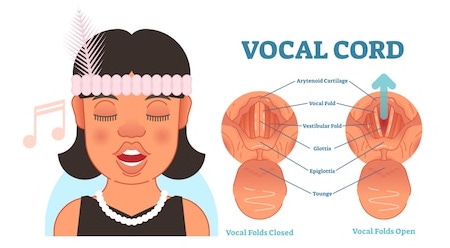
Hello lovely people! This month we are looking at vocal health and how to make sure we are treating our voices (and bodies) with the best care and love possible. Throughout the years I have met many singers that kind of forgot this is a thing; yeah, you really ought to look after your voice if you want it to always be responsive and ready for action. This is a general post I encourage everyone (so not only singers) to look at since it can benefit the voice in general, even for your daily speaking and wellbeing.
The human voice is a very intricate mechanism that relies on A LOT of bit and pieces to perform and work correctly. Being an internal instrument (inside of your body) it is very well protected by outside factors and agents, however if the body goes through some sort of stress, poor maintenance or too many nights out… well, your voice will suffer from it too! I’ve gathered a list of DOs and DON’Ts to shine a light on some factors that could have a positive or negative impact on your voice wellbeing. Let’s have a look at it together!
HOW TO LOOK AFTER YOUR VOICE CHECKLIST:
- DO make sure you stay hydrated constantly throughout the day; the only way to keep your voice young, fresh, reactive and flexible is through hydration. Drinking between 1.5L-2L of water daily really helps your whole body stay healthy, and your vocal tract loves water more than you can imagine!
- DO try to exercise or complete some sort of physical activity tasks on a daily basis. Your voice is more than just your neck area; you need to look after your whole body if you want to keep your voice at its best.
- DO get plenty of rest/sleep. Allow your body to have its sleep-wake cycles (8 hours sleep daily would be ideal); this is to reinforce the fact that singing involves a lot of muscles and general body effort therefore appropriate rest is mandatory.
- DO practice vocal rest. Following previous tip, vocal rest is also a very good option if you overused your voice, are experiencing vocal fatigue or pain or discomfort. You need at least one day a week that you can use to rest your voice (no singing, no loud speaking, no abusing/overusing your voice).
- DO try to keep good posture. Whether you are speaking or singing, good posture is a must for a variety of reasons, but here specifically to ensure correct alignment of vocal tract, wind pipes and groups of muscles.
- DO make sure you stretch your body muscles in the morning and practice a few seconds of breathing exercises to awake your vocal functions correctly.
- DO NOT consume too much alcohol. You’ve heard this one a million times, I know, but alcohol has a tendency to dry your vocal tract making it less flexible and responsive.
- DO NOT push your limits. If you feel tired or unwell, avoid singing or putting extra stress on your body. Taking a day off or two is not a sign of weakness, it’s a sign of respect towards your body and a very good long-term decision 🙂
- DO NOT shout or scream too often. These two actions can be very liberating, however overdoing them especially in short periods of time can be quite damaging/stressful for the body.
- DO NOT insist practicing an exercise or song if you are not sure how to tackle it. When something isn’t working and have no clue how to fix, talk to your teacher, instructor, director or whoever can provide guidance.
- DO NOT smoke too much. Another painful one for some people, but truly dangerous for your vocal tract as it is the first to feel the negative effects of smoking. Limit this activity to a bare minimum especially if you are trying to sing professionally or rely on your voice for your job in general.
So that’s it! These are few simple steps that everyone can follow to improve their vocal health. Raising vocal health awareness is one of my main cores as a teacher and educator as it truly ensures that your learning (and speaking abilities) won’t go to waste and lost too soon in life. I hope you guys enjoyed this post and were able to get an insight as to why it is important to take care of our bodies and how to do so properly and effectively. As always, I’m leaving a few extra resources linked below if you are interested to read and find our more about this topic.
IMPORTANT: IF YOU ARE CONCERNED ABOUT YOUR VOCAL HEALTH OR EXPERIENCING RECURRING PAIN, DISCOMFORT OR INABILITY TO MAKE SOUND (aphonia), BOOK A SESSION WITH ME OR TALK TO YOUR GP ABOUT IT TO ASSESS THE SITUATION AND FIND OUT NEXT STEPS.
NATIONAL INSTITUTE OF DEAFNESS AND OTHER COMMUNICATION DISORDERS (NICD) – more breakdowns and tips
BRITISH VOICE ASSOCIATION – download leaflets, booklets and other helpful resources