
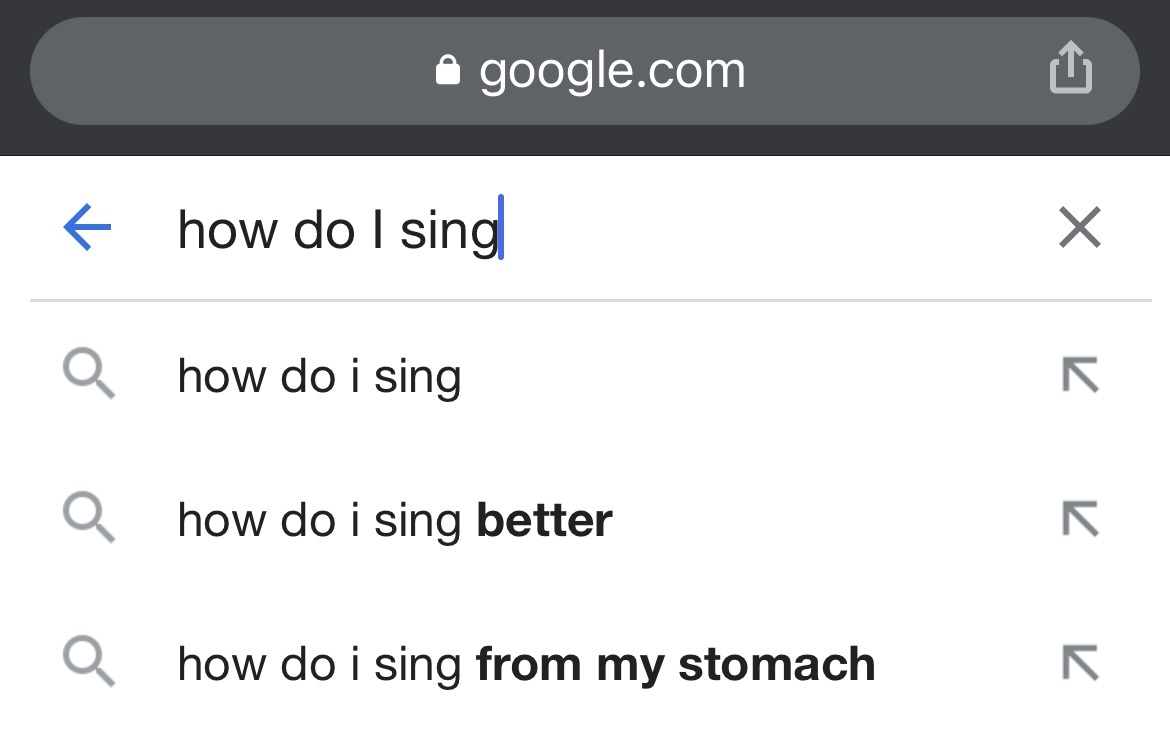
Hello everyone! We are back for another post following the series of ‘most searched on Google’, and this one sort of comes as a double feature because according to the world wide web A LOT of people seem to be concerned with two main things: 1) how do I sing better? And 2) how do I sing from my stomach?
There’s a lot to unpack within these two questions that have people puzzled across the globe, so let’s get into it!
Let’s start by saying that ‘how do I sing better’ is an extremely broad question. Generally, when people ask this sort of question they are just looking for accessible feedback filled with small tips and tricks that can boost their performance. Although that is a very acceptable and potentially appropriate answer, I would love to share with you some of the elements that, as a general advice, can improve one’s singing skills as well as their performance. Dynamics (intensity of sound in terms of volume) are a great way to start from for example. If your piece is lacking character or movement throughout sections, dynamics are the first thing to look at and think about. Analyse the piece you are singing and what the story or message you are trying to share with your audience. Think about your emotional connection and what intensity every section should have. Pop music nowadays is very predictable in a way, so you should always have a plan to spice things up throughout your piece and changing dynamics or melody could create a really unexpected lift. Resonance and vocal placement are also factors that very often play a big part in a singer’s journey to improvement. Not everyone is aware of how or where to place their sound, which eventually leads to less pleasant noises or even vocal restraint/fatigue. According to the genre of music you are singing, you should already have a few vocal effects in mind to go to right away and a strong placement for your voice. And last but certainly not least, pitching. Likely to be the most dreadful and feared out of all of the above, pitching is usually the first thing that stands out when done correctly and… also when done incorrectly. It is absolutely vital that begin your practice regime by understanding what notes and melodies you are supposed to perform before jumping into a vocal session. Even more proficient and advanced singers need at least a couple times to go through a song to learn the main melody and make sure that is locked in. With time and practice this step will always require less and less time/effort, but it should always be present in your to-do list when approaching new material. These few simple tips are not the magic wand that will make you sound like Beyoncé, however I promise that it’s a great way to get started!
Now let’s have a look at the infamous dilemma of ‘singing from the stomach’. WE DO NOT SING FROM THE STOMACH. Singing is an air-fuelled mechanism, nothing to do with digestion or organs linked to it. What most people want to know when they ask that is actually ‘how do I sing using my diaphragm’. The intake and outtake of air when singing should mainly be controlled by the diaphragm and intercostal muscles. This is because they are muscles, meaning we as humans are capable of controlling their activity and engagement or relaxation. Contrarily to organs which operate in our bodies without our direct command, muscles can be triggered at will. The whole breathing mechanism in singing in fact revolves around two main phases: air inhalation and exhalation. This exchange of air needs to be controlled at all times as air is the factor that creates sound when hitting the vocal cords. Poor/little control over the diaphragmatic breathing mechanism can and will prevent a singer from improving as well as keeping the voice healthy. The coordination between intake and outtake of air can be a tricky passage in one’s singing journey and it is often a make or break moment for most beginners; it will never happen over night and will require constant practice for a while until the body is capable of engaging the right muscles ‘subconsciously’.
Even though these topics and words may sound complex or foreign, they are very easily learned and practiced! If you are struggling with any of these, or found yourself asking the same two questions but want to take action and start your successful singing journey, feel free to get in touch with me (email address is on my website) or with any other vocal coach or singing teacher in your area. Remember, knowledge is power and practice brings improvement! 🙂
I hope you all are doing great and starting to embrace the holiday spirit while keeping warm and healthy. See you next month!!